
The truth about human donor fat, body contouring, cost and the surprisingly complicated science inside the syringe
Written by Injector Rick at BONAVADA Aesthetics, formerly Mr Beautox, in Worthing
Just when you thought the aesthetics industry had injected everything it possibly could, somebody opened the freezer and found donor fat.
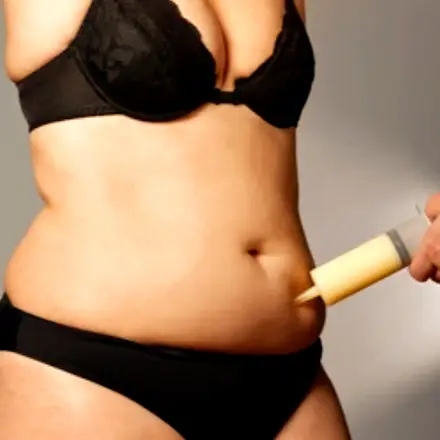
Yes, injectable fat from deceased human donors is now being used for cosmetic body contouring in the United States.
It has already been nicknamed:
“Fat off the shelf.”
That description makes it sound rather like popping into Waitrose for a packet of organic thighs.
The reality is considerably more scientific, although perhaps no less strange.
The straightforward answer
Products such as alloClae are made from donated human adipose tissue.
The tissue is recovered from carefully screened deceased donors and processed to remove viable cells, reduce potentially reactive cellular material and preserve structural components found naturally within fat.
The finished product is intended to be injected beneath the skin to restore volume, smooth contour irregularities or subtly enhance areas such as the breasts, hips and buttocks.
It is real.
But it is not simply somebody else’s living fat being squeezed into a syringe.
What is actually inside alloClae?
According to the manufacturer, alloClae contains:
- non-living donor fat cells
- extracellular matrix
- connective tissue
- naturally occurring lipids
The extracellular matrix is the microscopic framework that normally supports fat cells.
Once implanted, the material is intended to integrate with the surrounding tissue while encouraging the recipient’s own cells and blood vessels to grow into the area.
The manufacturer describes it as a human-tissue graft rather than a synthetic dermal filler (Tiger Aesthetics, 2026).
In simple terms:
The donor tissue provides the scaffolding, and your body is expected to gradually make the area more biologically its own.
Is all the donor DNA removed?
Claims that “all DNA is removed” are a little too neat.
The processing is intended to remove viable cells, reduce donor DNA and minimise substances that could trigger immune reactions.
That does not necessarily mean every microscopic fragment of genetic material has vanished.
FDA rules require human tissue donors to be screened and tested for relevant communicable diseases, while tissue establishments must follow procedures intended to reduce contamination and disease transmission (FDA, 2026).
So the accurate description is:
Highly processed and screened donor tissue with no viable cells, rather than completely DNA-free fat.
Is it the same as lip filler?
No.
Hyaluronic acid filler is a manufactured gel. It adds volume by physically occupying space and attracting water.
alloClae is donated human tissue designed to integrate and remodel.
There is another major difference.
If an HA filler result goes wrong, it can often be reduced using hyaluronidase.
There is no equivalent quick dissolving injection for donor-fat matrix.
Once it has begun integrating into the tissue, correcting an unwanted result may be considerably more complicated.
What does the research actually show?
Allograft adipose matrix is a legitimate and promising field of regenerative medicine.
However, the published human evidence remains small.
A 2026 systematic review found only ten human studies involving a total of 93 patients. Reported volume retention ranged from 21.5% to 100%, depending on the product, area treated and method used to measure the result (Morel et al., 2026).
In one small prospective facial study involving 11 women, average retention after six months was approximately:
- 57% in the cheek area
- 14% in the prejowl area
Those results involved a different allograft product and relatively small facial volumes, so they cannot tell us exactly how alloClae will behave when larger quantities are placed in the breasts, hips or buttocks (Gold et al., 2024).
The frequently repeated claim of around 85% retention after 18 to 24 months may reflect company data or individual clinical experience, but I could not verify it as a general conclusion supported by independent peer-reviewed research.
Is it safe?
Early reports are encouraging, but the numbers are far too small to reliably identify uncommon or long-term complications.
The alloClae manufacturer lists potential risks including:
- cyst or nodule formation
- pain
- infection
- bleeding or haematoma
- allergic or immune reactions
- skin discolouration
It also advises against use in patients with severe allergies, a history of anaphylaxis or active infection (Tiger Aesthetics, 2026).
The unanswered questions are more interesting:
- What happens after five or ten years?
- Can the material become lumpy or irregular?
- How does it affect mammograms and breast imaging?
- What happens if too much is injected?
- Can it complicate later surgery?
- How predictable are repeat treatments?
- How easily can integrated material be removed?
The honest answer is that we do not yet know.
How much does donor fat cost?
The donor may have given it away, but the clinic certainly does not.
Publicly reported US prices suggest that 25 cc may cost around $5,000 to $7,000, depending on the practitioner and treatment area.
That amount may be enough for a modest contour correction, implant camouflage or subtle cleavage enhancement. Larger body treatments could require considerably more product and cost well into five figures (Edgar, 2025).
This is not a budget alternative to ordinary filler.
At larger volumes, the cost begins competing with surgery and conventional fat transfer.
Is alloClae available in the UK?
As of July 2026, I could not verify an authorised UK distributor or UK treatment provider through the manufacturer’s official provider directory.
Human tissues intended for patient treatment are regulated in the UK. Establishments involved in importing, processing, storing or distributing relevant tissue generally require appropriate Human Tissue Authority licensing and quality systems (HTA, 2026).
This is therefore not something a UK clinic could responsibly treat like an ordinary filler and casually order from an overseas website.
My honest verdict
This is not zombie filler.
It is a genuine human-tissue graft with an interesting biological mechanism and potentially valuable uses.
It may be particularly useful for:
- people who are too lean for conventional fat transfer
- correcting liposuction dents
- disguising breast implant rippling
- restoring modest soft-tissue volume
- refining hip dips or other contour irregularities
But the marketing is moving faster than the long-term evidence.
Current human studies are small, product-specific retention is uncertain and there is no simple reversal treatment.
So my conclusion is:
“Off-the-shelf” donor fat is scientifically credible and potentially exciting, but it is still too new to make confident promises about long-term retention, complications or removal.
This is not currently a treatment offered at BONAVADA Aesthetics Worthing.
And for once, I am perfectly happy to let America go first.
Frequently asked questions
Is alloClae really made from dead people?
It is made from adipose tissue donated by deceased human donors and processed for use as a tissue graft.
Is donor fat the same as traditional fat transfer?
No. Traditional fat transfer uses your own living fat, harvested through liposuction. alloClae uses processed donor tissue and does not require fat harvesting.
Can alloClae be dissolved?
Not with hyaluronidase. It is not a hyaluronic acid filler.
Is it available in Britain?
I could not verify official UK availability as of July 2026.
Does it permanently become your own fat?
The material is intended to integrate and support the growth of the recipient’s tissue, but the long-term degree of retention remains uncertain.
Written by Injector Rick at BONAVADA Aesthetics, Worthing.
Because apparently “Would anyone like some of my fat?” is now a legitimate medical question.
References
Edgar, J. (2025) ‘Would you get a fat transfer with someone else’s fat?’, Allure, 19 November. Available at:
https://www.allure.com/story/alloclae-injectable-filler-explainer
Accessed: 31 July 2026.
Food and Drug Administration (FDA) (2026) Testing donors of human cells, tissues, and cellular and tissue-based products: specific requirements. Available at:
Accessed: 31 July 2026.
Gold, M.H. et al. (2024) ‘A multicenter pilot study of a novel allograft adipose matrix in malar and prejowl volume restoration’, Plastic and Reconstructive Surgery Global Open, 12, e5523. doi: 10.1097/GOX.0000000000005523. Available at:
https://pubmed.ncbi.nlm.nih.gov/38268716
Human Tissue Authority (HTA) (2026) Human application. Available at:
https://www.hta.gov.uk/guidance-professionals/guidance-sector/human-application
Accessed: 31 July 2026.
Morel, S.B.A., Vranis, N., Perez, J., Nikolis, A., Ghavami, A. and Safran, T. (2026) ‘Current applications and indications of allograft adipose matrix: A systematic review’, Plastic and Reconstructive Surgery, 157(4), pp. 658-665. doi: 10.1097/PRS.0000000000012506. Available at:
https://pubmed.ncbi.nlm.nih.gov/41056060
Tiger Aesthetics Medical (2026) alloClae: product and safety information. Available at:
https://alloclae.com/
Accessed: 31 July 2026.